According to tradition, Mary and Eliza Chulkhurst were born joined together in the village of Biddenden, in Kent, in the year 1100. Almost everything about them is uncertain, except that a village still remembers them. New Histories, University of Sheffield
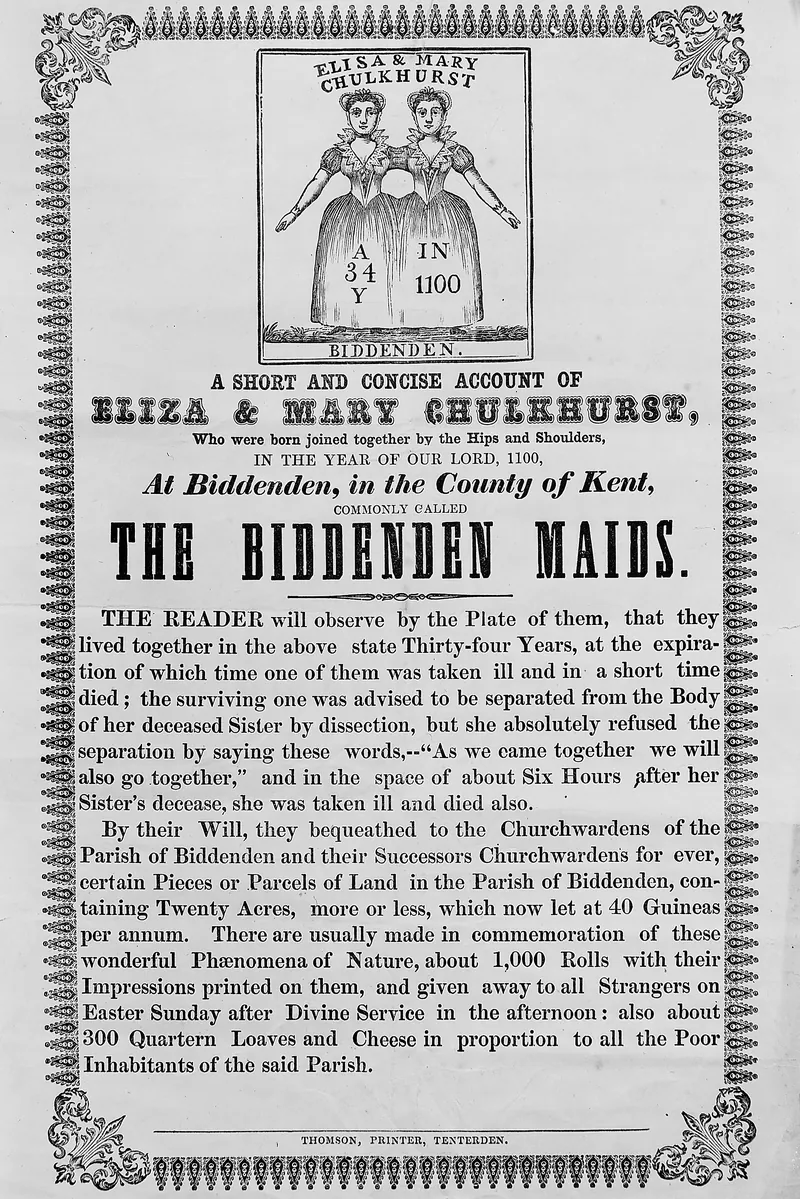
What history can and can’t say
Irish chronicles do record conjoined twin girls born at around that time: the Annals of Clonmacnoise say 1100, the Annals of the Four Masters 1103, and the Chronicon Scotorum 1099. Historians now think the sisters were more likely joined only at the hip, since two points of joining is very rare. New Histories, University of Sheffield
The British Museum, which holds an earthenware plaque made from a biscuit mould, notes that the story seems to have arisen in the late 18th century. British Museum
Bread, cheese and too much beer
The Easter dole caused such “disorder” that in 1681 the Archbishop of Canterbury threatened to step in, and in 1882 the free beer was abolished. New Histories, University of Sheffield
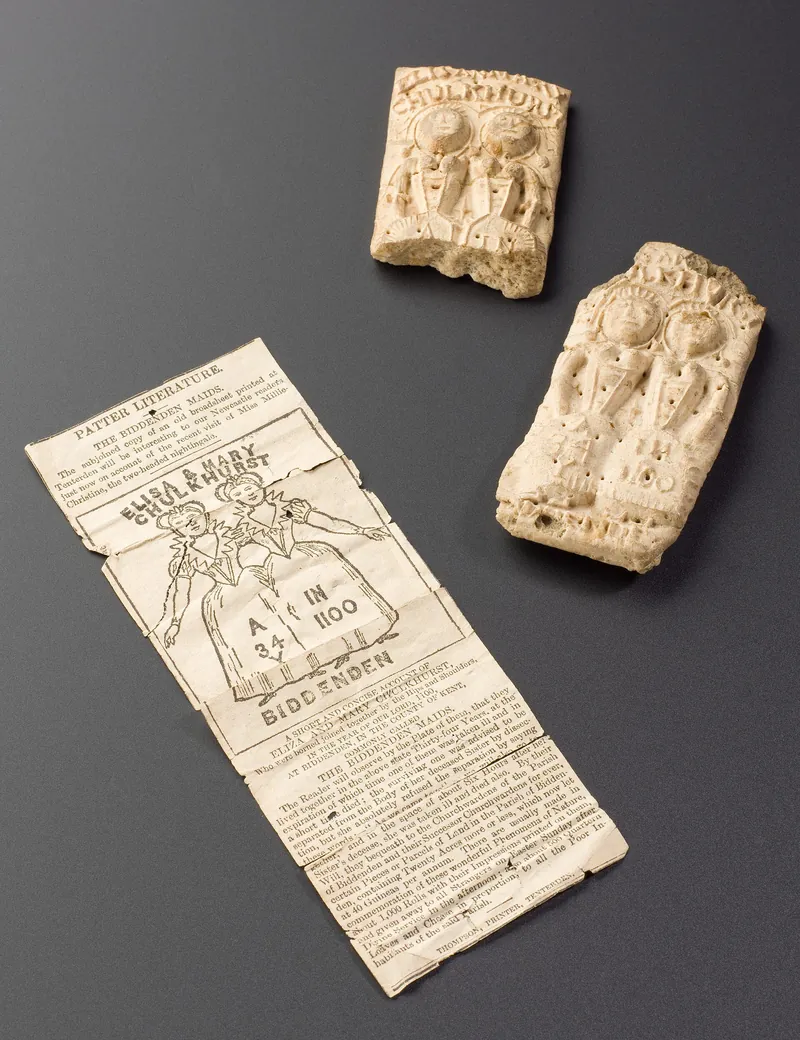
The Biddenden cakes
From the 18th century, hard biscuits made of flour and water and stamped with the twins’ image were handed out too, sometimes thrown to the crowd from the church roof. A broadsheet of 1808 says 1,000 were given away every Easter. Biscuits made from a 1906 mould are still handed out to Biddenden’s pensioners and widows, and an 18th-century biscuit sold at auction in 2021 for £100. New Histories, University of Sheffield
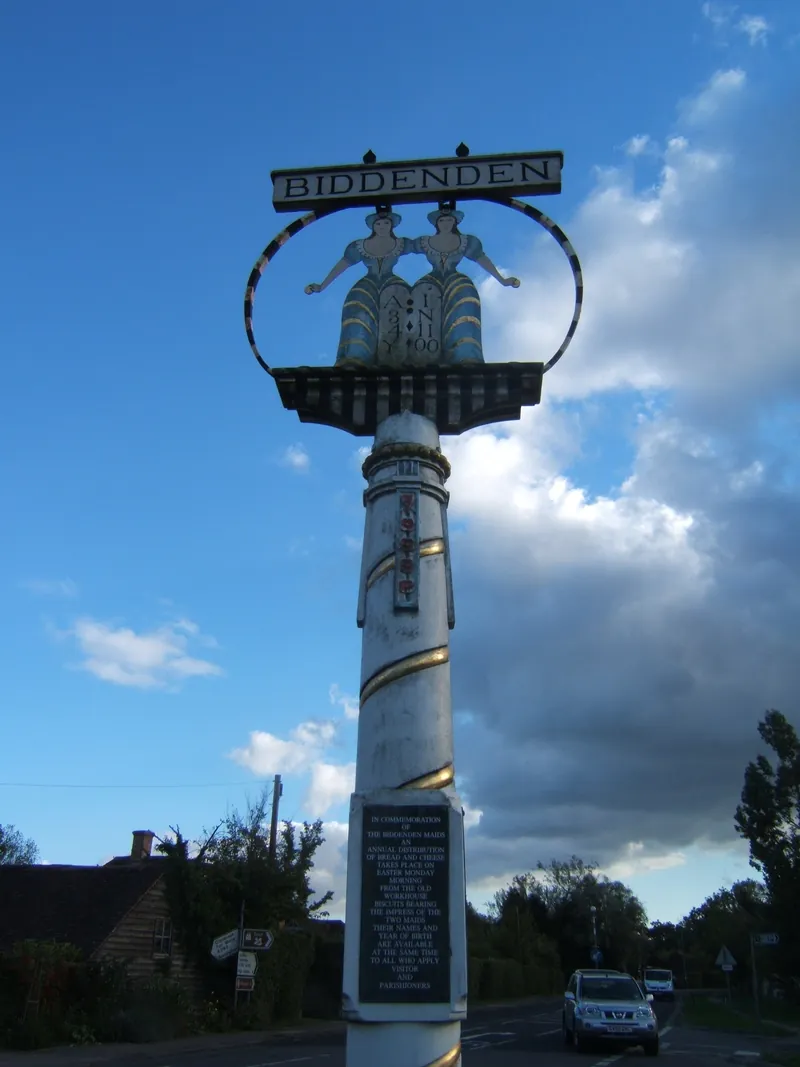
The village sign, put up in 1922, copies the biscuit picture: it says 1100 but dresses the sisters in Tudor clothes, keeping both versions of the story happy. New Histories, University of Sheffield