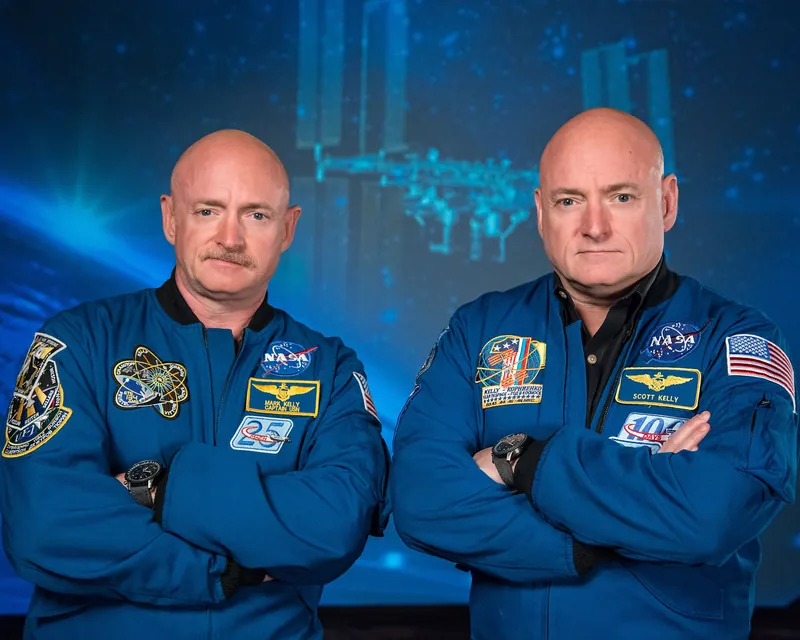
Scientists studying the effect of space on the human body have a problem: everyone is different. In 2015 NASA found a neat solution. It sent astronaut Scott Kelly to the International Space Station for 340 days and kept his identical twin brother Mark, a retired astronaut, on the ground for comparison. NASA
Ten teams, 27 months
The NASA Twins Study ran from 2015 to 2016 and brought together ten investigations. It was supported by 84 researchers at 12 locations across eight US states, and the findings drew on 27 months of data. NASA Scott Kelly became the first American astronaut to spend nearly a year in space. NASA
Telomeres that grew
Telomeres are the protective caps on the ends of chromosomes, often used as a marker of ageing. Unexpectedly, the telomeres in Scott’s white blood cells got longer in space. They shortened after he returned to Earth, and their average length was back to normal six months later. Mark’s stayed stable throughout. NASA
What changed, and what came back
A flu vaccine given in space worked just as it does on Earth. Many of Scott’s genes changed their activity in space, and most returned to normal within six months, though a small percentage linked to the immune system and DNA repair had not. NASA