In February 1979 two identical twins met for the first time since they were four weeks old. Both had been named James by their adoptive families. Both went by Jim. The New York Times
A list of coincidences
James Arthur Springer and James Edward Lewis grew up in different families in Ohio, about 45 miles apart. TIME When they compared notes, the list went on and on. Each had married and divorced a woman named Linda, and each had then married a woman named Betty. Springer named his first son James Allan. Lewis named his James Alan. Each had grown up with an adopted brother called Larry, and each had owned a dog called Toy. The New York Times
Both bit their fingernails, both smoked the same brand of cigarettes, both enjoyed woodworking, and both had holidayed on the same stretch of Florida beach. Harvard University Press
The question Galton asked
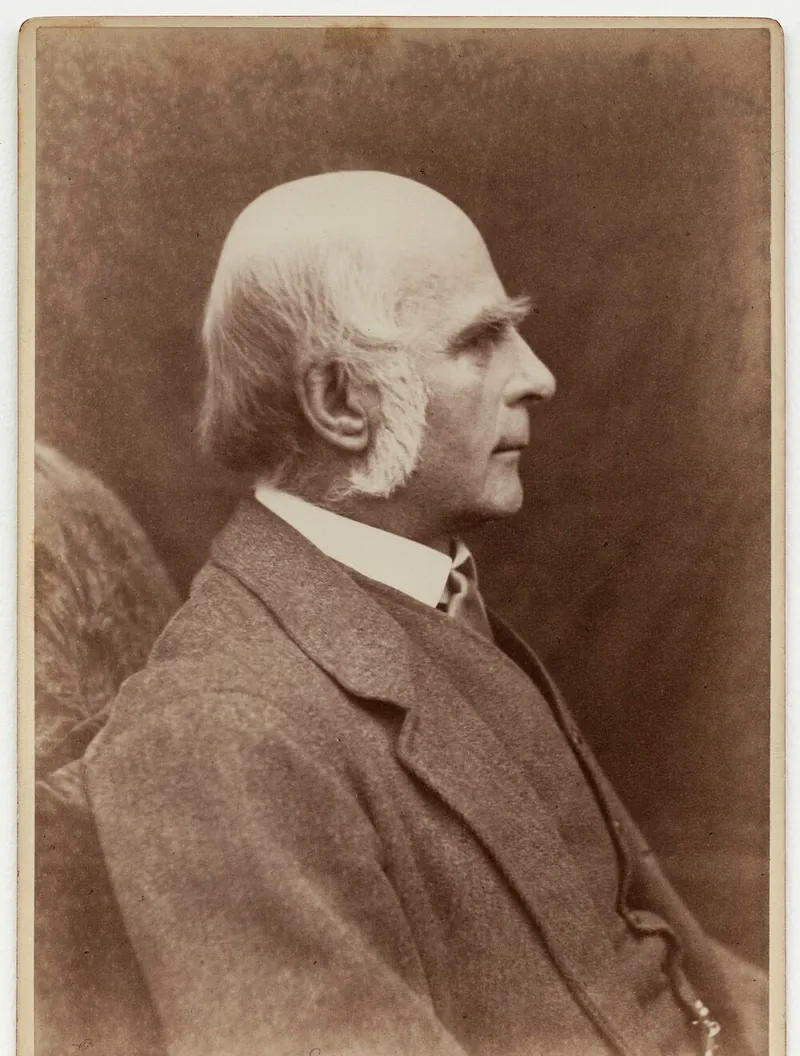
Using twins to untangle “nature” from “nurture” was not a new idea. In 1875 the Victorian scientist Francis Galton, a half-cousin of Charles Darwin, published “The History of Twins”. He sent questionnaires to twins and their relatives, received replies about eighty pairs, and concluded that nature had the larger effect. Embryo Project Encyclopedia
A century later the Jims gave researchers an unusually clean version of the same experiment: identical genes, different homes.
The Minnesota study
The psychologist Thomas J. Bouchard Jr. invited the newly reunited Jims to his laboratory at the University of Minnesota for several days of psychological and medical tests. He had not been optimistic about finding many separated twins, but the publicity around the Jims brought others forward. By the time the study ended in 1999 it had assessed 137 pairs, 81 identical and 56 fraternal, all raised apart. Twin Research and Human Genetics
Its central finding surprised many scientists: across a range of traits, identical twins raised separately turned out about as alike as identical twins raised together. Harvard University Press