Around the world, about 12 twins are born for every 1,000 births. In Igbo-Ora, a town in south-western Nigeria, the figure is reported to be about 45. BBC News
Igbo-Ora: the twin capital
When BBC reporters arrived in Igbo-Ora in 2024, a woman had just given birth to twins at the local clinic. Her own twin brother was in the ward taking photos, the babies’ grandmother was a twin, and their great-grandmother had given birth to two sets of twins. BBC News
In Yoruba culture twins are a blessing and their names are decided in advance. Whatever their sex, the first-born is Taiwo, “the one that tests the world”, and the second is Kehinde, “the one that came after”. BBC News
Careful counts back the town’s reputation. In the 1960s researchers visited every household in Igbo-Ora every fortnight and found a twinning rate of about 45 per 1,000, roughly four times that of Europe and the USA. The extra twins are almost all fraternal: only about 8.6 per cent of newborn twin pairs in nearby Ibadan were identical, compared with about 30 per cent in white European and American populations. Acta Geneticae Medicae et Gemellologiae
Kodinhi: 2,000 families, 400 pairs
Kodinhi is a village in the Malappuram district of Kerala, India. It has around 2,000 families and, by local estimates, at least 400 pairs of twins. A door-to-door survey in 2008 counted 280 pairs. The News Minute The rate is reported as about 42 to 45 twins per 1,000 births, roughly six times the global average then quoted. DW
Doctors told Reuters that families there had no unusual diet, no exposure to chemicals and no fertility drugs, and that women from Kodinhi who married and moved far away were said to have twins too. Reuters In 2008 local families formed the Twins and Kins Association, a registered body that works for the welfare of the village’s twins. The News Minute
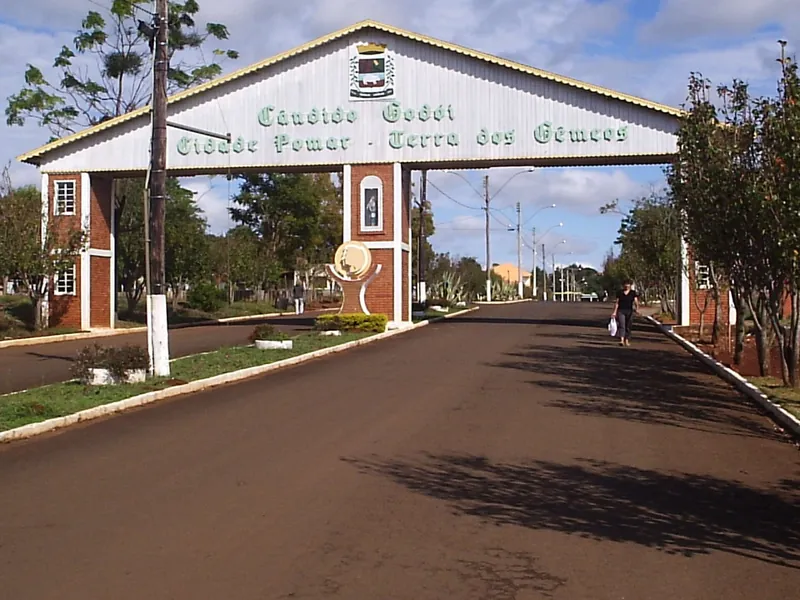
Cândido Godói and the Nazi legend
Cândido Godói is a small town in southern Brazil, with about 6,000 inhabitants, known as the “Twins’ Town”. A claim spread that its twins were the result of experiments by the Nazi doctor Josef Mengele, who was said to have visited the area in the 1960s. PLOS One
In 2011 a team of geneticists tested the idea against 6,262 baptism records from 1959 to 2008. They found 91 pairs of twins and one set of triplets, and no rise at all in twin births during the years Mengele was allegedly there. Twins had been just as common decades earlier. PLOS One
Instead, the study pointed to a “founder effect”. The town was settled by a small number of families, and mothers of twins turned out to be more closely related to each other than mothers who never had twins, which suggests that an inherited tendency became concentrated in one area, Linha São Pedro. PLOS One
The town has embraced its title. There is an entrance arch welcoming visitors to the “Terra dos Gêmeos”, a twins’ museum, and a twins’ festival in Linha São Pedro every two years. Clinical & Biomedical Research (UFRGS)