The Yoruba of south-western Nigeria have one of the highest twinning rates in the world, an estimated 45 to 50 twins in every 1,000 births. Twins are revered. Smarthistory
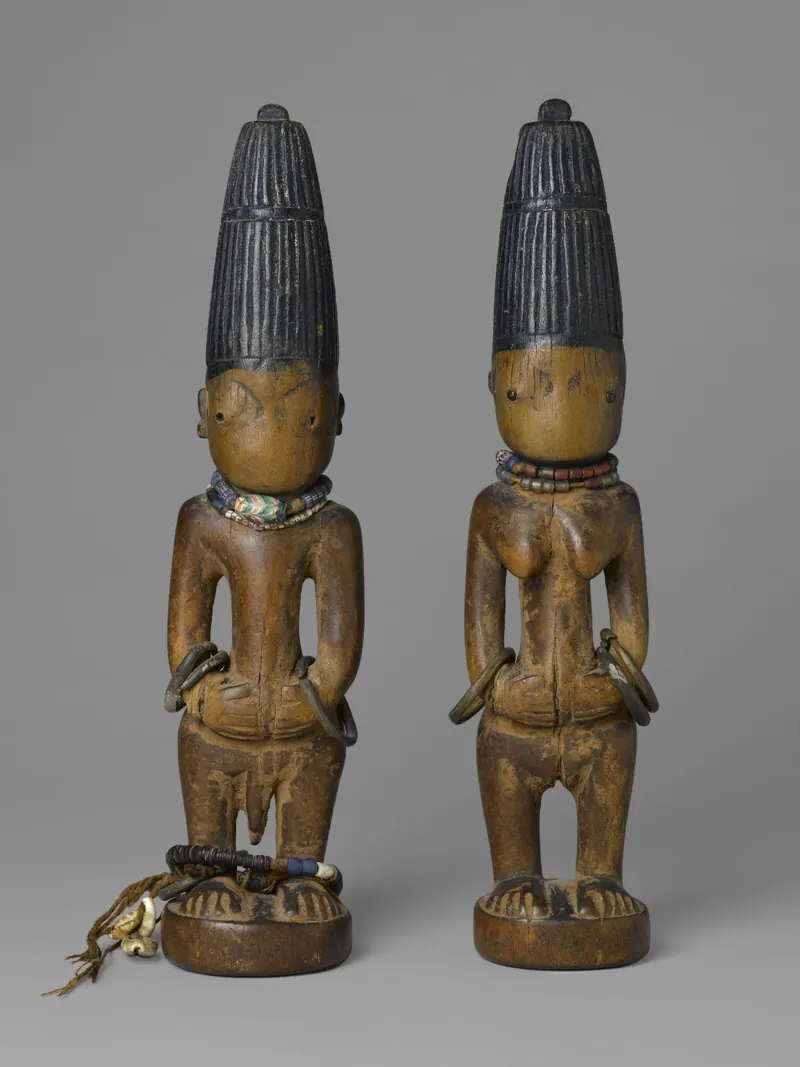
A figure for a lost twin
Twins are often born small, and in the past many did not survive. When a twin died, the parents might consult an Ifá diviner, who could help them find a carver to make an ère ìbejì: a small wooden figure that served as a focus for the spirit of the child who had died. Smarthistory
The figure was not put on a shelf and forgotten. It was ritually washed, fed and clothed, and carried in a cloth wrapper on the mother’s back as a real baby would be. Figures might be decorated with camwood powder, blue paint, beads, shells and fine textiles. Smarthistory
Worn smooth by love
On the pair in the Brooklyn Museum, the faces have almost disappeared. The art historian Peri Klemm explains that the mother touched them so often, and rubbed them so often with oil, that the features wore away. Smarthistory
Oddly, ère ìbejì do not look like babies. They are carved as adults in the prime of life, the age the child would never reach. Smarthistory
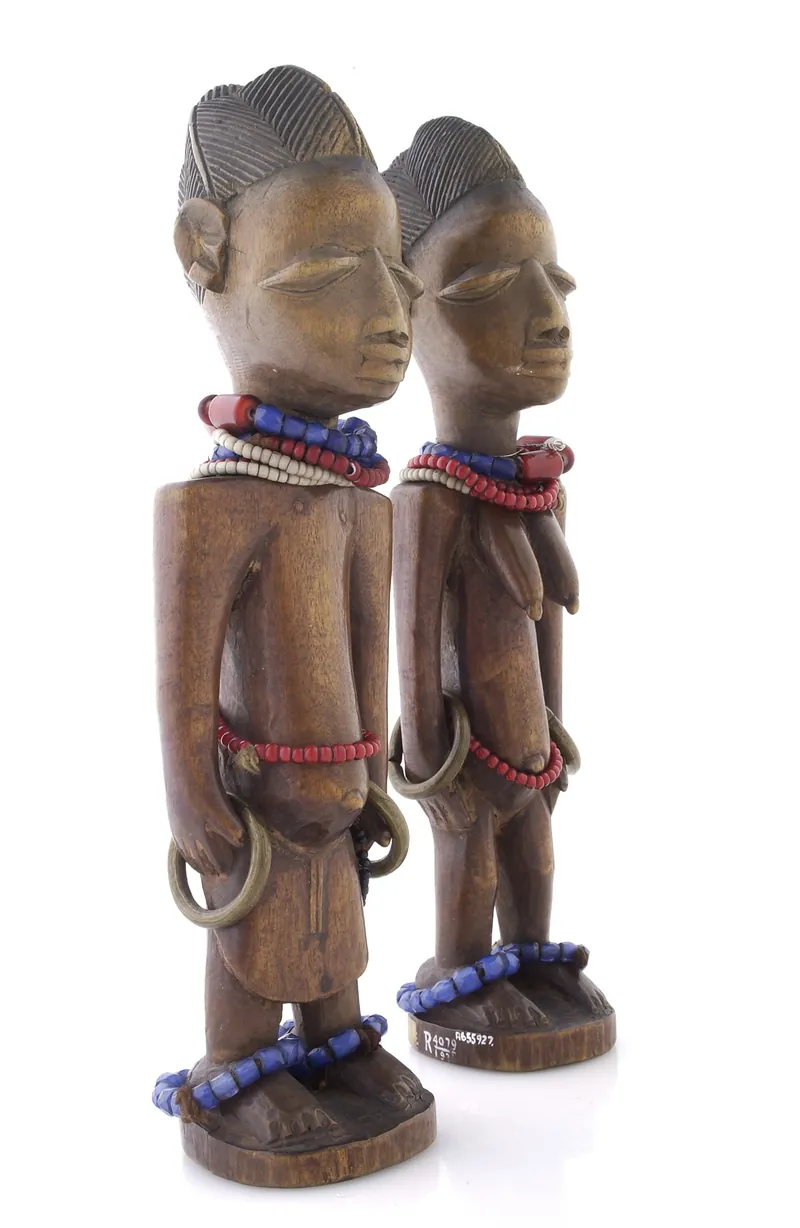
Still in use
Over the last fifty years, commissioning a carver has become less common, and many figures have gone to Western collectors. But the practice has not stopped: since the 1970s some parents have used manufactured dolls or photographs instead of carved figures. Smarthistory
In Igbo-Ora, the self-styled twin capital, BBC reporters in 2024 watched a ritual offering of palm wine and beans to the twin deities at a family shrine. BBC News